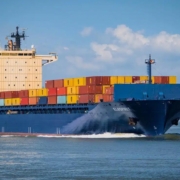

Smart Ports Around the World
Traditional ports are undergoing a radical transformation into what we now call “smart ports.” This evolution combines technologies such as IoT, artificial intelligence (AI), blockchain, digital twins, and 5G networks to optimize processes, improve sustainability, and strengthen logistics competitiveness.
What Defines a Smart Port?
A smart port integrates digital technologies with traditional port operations in order to:
- Monitor cargo flows, vessel traffic, and landside operations in real time
- Use data analytics and AI for predictive maintenance, space allocation, and route optimization for ships and land vehicles
- Deploy digital twins to virtually replicate port infrastructure and simulate operational scenarios
- Promote sustainability through equipment electrification, renewable energy, and infrastructure for zero-emission vessels
- Seamlessly connect terminals, shipping lines, port authorities, logistics operators, and service providers
Examples of Smart Ports Around the World
1. Port of Rotterdam (Netherlands)
The Port of Rotterdam is a global benchmark for port digitalization. Key initiatives include:
- A digital twin that simulates port traffic, crane resources, and truck flows
- IoT sensors and AI systems enabling predictive maintenance for cranes, containers, and access roads, reducing downtime
- Clean-energy strategies including shore-power for vessels and wind farm development
- Collaboration with private 5G networks and advanced communication infrastructure to strengthen connectivity
This blend of efficiency, predictability, and sustainability makes Rotterdam a global paradigm of smart port excellence.
-
Shanghai Yangshan Deep-Water Port (China)
Yangshan is one of the most automated ports in the world and a leading example of smart port innovation:
- Automated Guided Vehicles (AGVs) transport containers without drivers between ship and terminal, optimizing turnaround times
- Robotized cranes and AI-based systems improve loading and unloading speed and accuracy
- The port uses weather sensors and prediction systems to respond rapidly to typhoons and storms
Yangshan shows how high-level automation, paired with data-driven systems, can take logistics performance to a new level.
3. Port of Los Angeles (United States)
As the main trans-Pacific gateway to and from the U.S., the Port of Los Angeles has adopted several smart port initiatives:
- Digital twins for modeling vessel movements, cargo flow, and overall port performance
- Zero-emission cargo-handling equipment (electric cranes, hydrogen fuel-cell trucks) to enhance environmental sustainability
- AI-driven smart security systems using cameras and drones to monitor infrastructure and critical areas
These improvements shorten vessel turnaround times, increase security, and align the port with global sustainability standards.
Key Lessons for Ports and Operators
- Investing in digital infrastructure (sensors, 5G or private networks, data platforms) is essential for the transition
- Process automation—AGVs, robotized cranes, predictive maintenance—reduces costs, errors, and wait times
- Digital twins offer a holistic view of the port and allow simulation of critical scenarios before failures occur
- Sustainability is now mandatory, not optional; ports with clean-energy systems, zero-emission equipment, or shore-power have a competitive advantage
Smart ports are no longer a future vision—they are being built today and already delivering tangible results in efficiency, sustainability, and logistics competitiveness. The cases of Rotterdam, Shanghai Yangshan, and Los Angeles show how deep digitalization can transform port operations.
For logistics operators, terminals, and infrastructure managers still in the early stages of this transition, the key lies in data, connectivity, automation, and collaboration. And for platforms supporting this evolution—like GP Nauticals—the role is clear: to facilitate and accelerate the path toward the port of the future.
Visit our blog for more insights on innovation and technology.
The image in this entry is licensed by Envato.